

A Science-Based Guide for Pet Owners in Multi-Cat home
Multi-cat households are common, but few pet owners realize how frequently cats experience chronic, low-grade stress when sharing space with other cats. Unlike dogs, cats did not evolve as cooperative, pack-living animals, which means their tolerance for proximity, shared resources, and routine disruption is limited by nature.
Left unaddressed, this stress can progress from subtle avoidance into serious welfare and behaviour concerns. Understanding the underlying science is the first step to prevention.
The Evolutionary Background of Cat Social Behaviour
Domestic cats are descended from solitary, territorial hunters. While they can form social groups under the right conditions, their natural survival strategy relies heavily on:
- Environmental control
- Predictable resource access
- Safe retreat opportunities
- Minimal forced social contact
When these needs are compromised, cats activate their stress response systems, often leading to tension with housemates.
What “Intercat Tension” Actually Means
Intercat tension describes ongoing emotional discomfort between cats living in the same environment. Importantly, this does not always involve open aggression.
There are two primary forms of tension:
Passive conflict
This includes avoidance behaviours such as hiding, freezing, limited movement through the home, and indirect resource restriction.
Active conflict
This presents as staring, stalking, hissing, swatting, vocalizing, and physical aggression.
Most households experience passive conflict long before active aggression becomes visible.
Neurobiology of Stress in Cats
When a cat experiences threat or uncertainty, the brain activates the sympathetic nervous system and the hypothalamic–pituitary–adrenal (HPA) axis. This releases stress hormones such as cortisol and adrenaline, which:
- Increase vigilance
- Reduce appetite in some cats
- Suppress immune function
- Lower tolerance to social interaction
Chronic activation of this system contributes to long-term behaviour changes and health risks.
Why “Dominance” Is an Outdated Explanation
Modern veterinary behaviour science has moved away from dominance-based explanations in cats. Conflict is more accurately explained by:
- Fear-based responses
- Resource insecurity
- Learned negative associations
- Pain-associated irritability
Using dominance terminology oversimplifies a biologically complex stress response and delays effective intervention.
Environmental Risk Factors in Multi-Cat Homes
Several environmental conditions significantly increase the risk of intercat tension:
- Too few litter boxes
- Concentrated feeding stations
- Lack of vertical escape pathways
- Limited resting areas
- Overcrowded living spaces
- Frequent household changes
Even small resource bottlenecks, such as a single narrow hallway or doorway, can become chronic stress points.
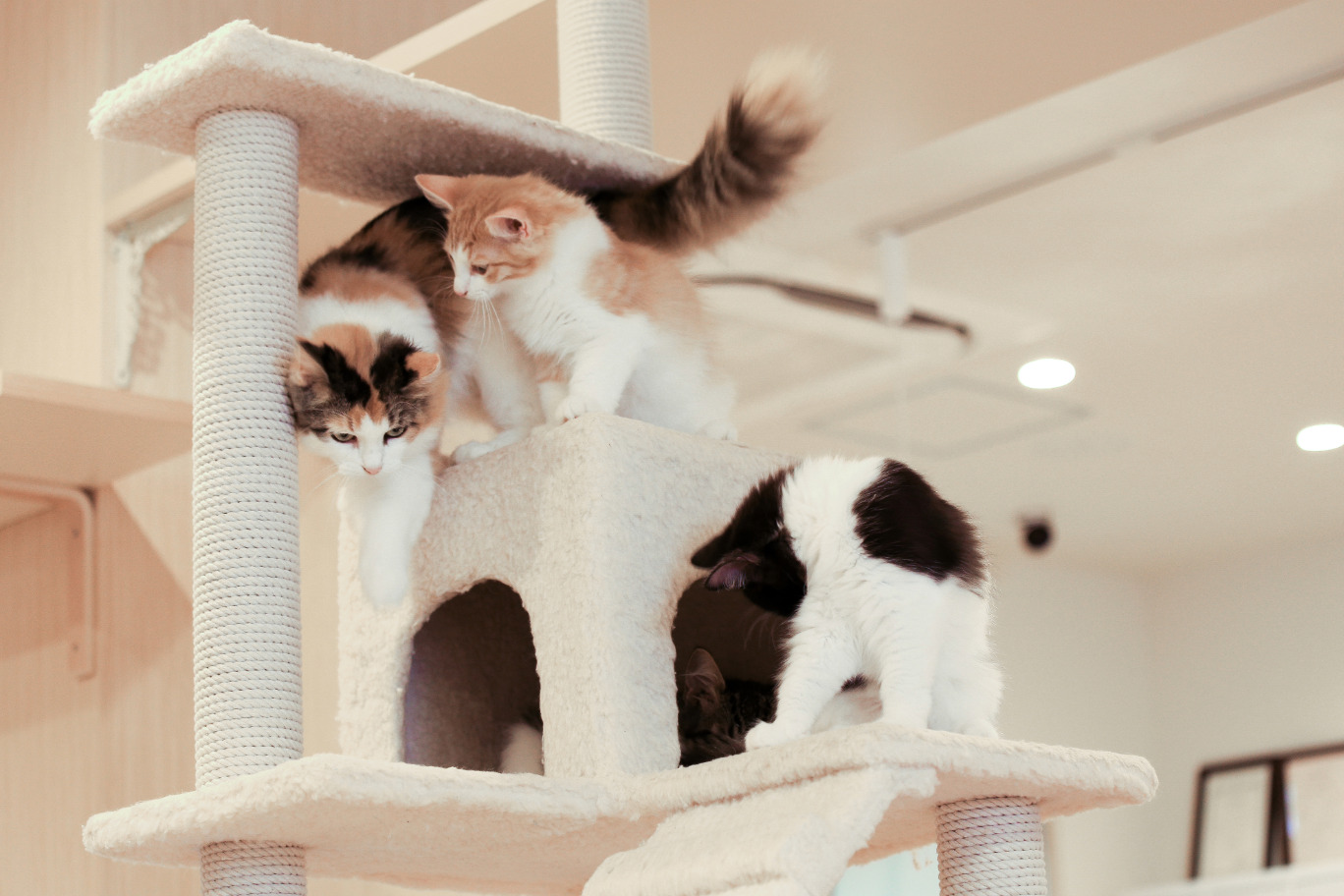
The “Five Pillars” of a Healthy Multi-Cat Environment
Veterinary behaviour experts recommend five foundational principles to reduce conflict and promote welfare:
- Safe and secure resting places (including elevated and enclosed areas)
- Multiple, well-distributed resources (litter, food, water, scratching)
- Opportunities for play and natural predatory behaviour
- Predictable, respectful human interaction
- A sensory environment that minimizes sudden change
When these pillars are respected, stress physiology decreases and social tolerance improves.
The Medical–Behavioural Connection
Pain and illness significantly alter behaviour. Conditions commonly linked to sudden increases in cat-to-cat conflict include:
- Osteoarthritis
- Dental disease
- Chronic urinary discomfort
- Gastrointestinal disease
Any new behavioural change should be treated first as a potential medical issue before behavioural modification begins.
Evidence-Based Introduction Strategies
Improper introductions are one of the strongest predictors of long-term conflict.
A medically and behaviourally sound introduction includes:
- Complete initial environmental separation
- Scent familiarization prior to visual exposure
- Visual contact only when relaxed body language is consistently observed
- Short, positive, controlled interactions
Progression should be based on behaviour, not time.
Measuring Success in Multi-Cat Homes
Healthy coexistence is defined by emotional safety, not affection.
Clinical indicators of success include:
- Calm movement throughout the home
- Unrestricted access to resources
- Relaxed postures and facial expressions
- Stable elimination and grooming habits
Best-friend behaviour is optional. Emotional stability is essential.
Professional Perspective
Intercat tension is not a failure of training or personality; it is an understandable biological response to environmental and social pressure. With informed environmental design and early behavioural support, most cases can be significantly improved or prevented.
Education remains the most powerful tool in protecting feline welfare in multi-cat households.